How My Energy-Efficient Home Saves Me $3,000+ a Year
When we were searching for our home in the Arizona desert, we didn’t just want it to look beautiful — we wanted it to perform beautifully, too. Comfort, health, and sustainability were at the top of our list.
Now that we’ve lived in our all-electric, energy-efficient home for over a full year, the results are in:
Our average electric bill is just $162 per month. ( Average from Oct 2024-Sept. 2025, high bill was $255 in July, low bill was $93 in November)
That includes everything — heating, cooling, cooking, hot water, lighting, and even charging our Electric Vehicle. (Plus we keep our home at a very comfortable 70-73 degrees all year long)
For a 2,400-square-foot, two-story home in Phoenix, that number still surprises me. But it’s proof of what can happen when a home is built thoughtfully from the ground up.
What a “Typical” Home in Phoenix Costs to Run
In most standard construction around the Valley, HVAC alone can easily cost $3,000 to $5,000 per year. Add in appliances, water heating, and general electricity use, and the average total energy cost for a 2,400-square-foot home often lands between $4,500 and $6,500 per year.
By comparison, our total annual energy cost — including EV charging — is $1,944.
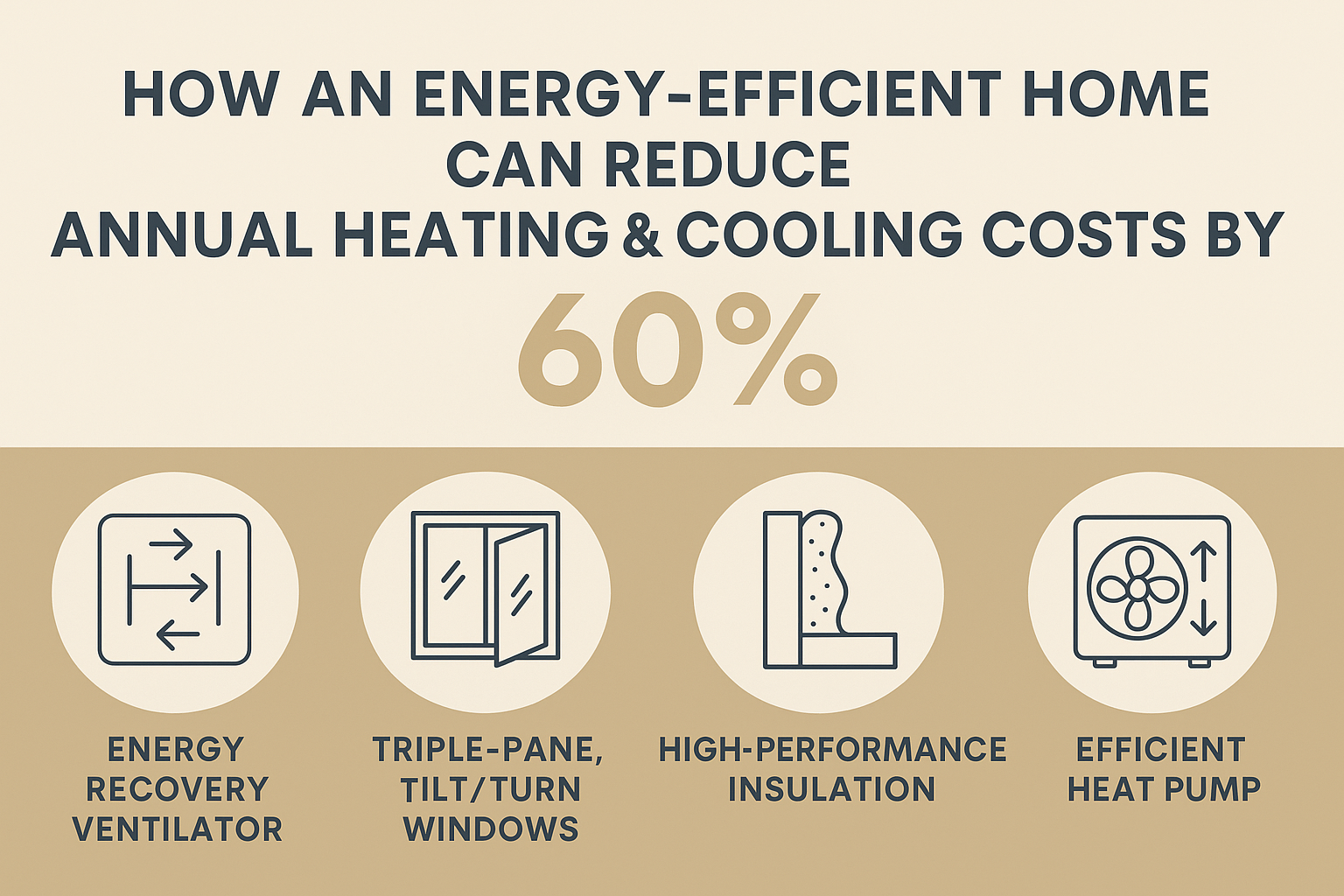
That’s a savings of roughly $2,500 to $4,500 per year, or about 60–70% less energy cost than a typical home our size.
Why Our Home Performs So Well
These savings didn’t come from one “magic” product — they came from a whole-house strategy focused on efficiency and building science.
A Tight, Well-Insulated Envelope
Our walls and roof are super-insulated, sealed for air tightness, and wrapped in continuous insulation to eliminate thermal bridging. That means less heat gain during our intense desert summers — and less energy loss when it cools down at night.
ERV Ventilation System
Instead of leaking air through cracks, our home uses an Energy Recovery Ventilator (ERV) to bring in fresh air while capturing energy from the outgoing air. The result: balanced ventilation, healthy indoor air, and minimal energy waste.
High-Performance Windows
Our triple-pane, tilt and turn windows make a huge difference. They reflect heat, prevent drafts, and block outside noise — a quieter, more comfortable space year-round.
All-Electric Systems
We opted for efficient electric heat pumps for heating, cooling, and water heating. They operate at 3–5 times the efficiency of standard resistance systems. Pair that with an induction cooktop and smart appliances, and our home uses energy more intelligently across the board.
EV Charging
Even with charging our electric car at home, our total electric bill remains lower than what many households spend just to run their air conditioning.
The Long-Term Payoff
Saving roughly $3,000 per year in energy costs adds up quickly. Assuming modest utility rate increases, that’s over $35,000 in ten years and around $80,000 over twenty — not to mention a quieter, healthier, more comfortable home.
And there’s another payoff: peace of mind. Our home stays cooler longer during outages, our air stays cleaner through wildfire smoke, and our mechanical systems work together efficiently — not against each other.
Why It Matters
Sustainability isn’t about sacrifice. It’s about designing smarter — with materials, systems, and strategies that reduce waste while improving comfort.
When a builder claims a home is “energy-efficient,” ask the right questions:
- How is the home sealed and ventilated?
- What insulation materials are used?
- Are the windows triple-pane and thermally broken?
- What’s the HVAC strategy — and is it verified through testing?
Good design and construction should deliver more than a promise; they should deliver performance you can measure — month after month, year after year.
Bottom line:
Our energy-efficient home isn’t just sustainable — it’s financially smart. Every day, it quietly pays us back in comfort, health, and thousands of dollars in long-term savings.