Living with Induction Cooking: A Homeowner’s Take After Two Years
When we moved into our home two years ago, induction cooking wasn’t something I specifically chose. It came with the house—part of the developer’s vision for a sustainable, all-electric home.
At the time, I was curious but neutral. I had cooked for years on a gourmet-style gas range, along with traditional electric burners and smooth-top electric cooktops. I assumed induction would be fine.
What I didn’t expect was how much I would end up loving it.
Cooking on Induction, Day to Day
As a homeowner who cooks most nights, what matters most to me is how a kitchen performs—not just how it sounds on paper.
The first thing I noticed was speed. Water boils incredibly fast, which makes everyday cooking noticeably easier. Pasta, blanching vegetables, even quick weeknight meals just move faster.
The second thing was cleanup. Because the cooktop itself doesn’t get extremely hot, spills don’t bake onto the surface. Most nights, a simple wipe is all it takes. After years of scrubbing and lifting gas grates and burner caps, this still feels like a small luxury.
The cooktop also responds immediately when you turn the heat down. That kind of control makes cooking feel calmer and more predictable.
Let’s Talk About Pans (It’s Easier Than You Think)
One of the most common questions I hear about induction is cookware. The reality is that it’s much simpler than it sounds.
If a magnet sticks to the bottom of the pan, it works.
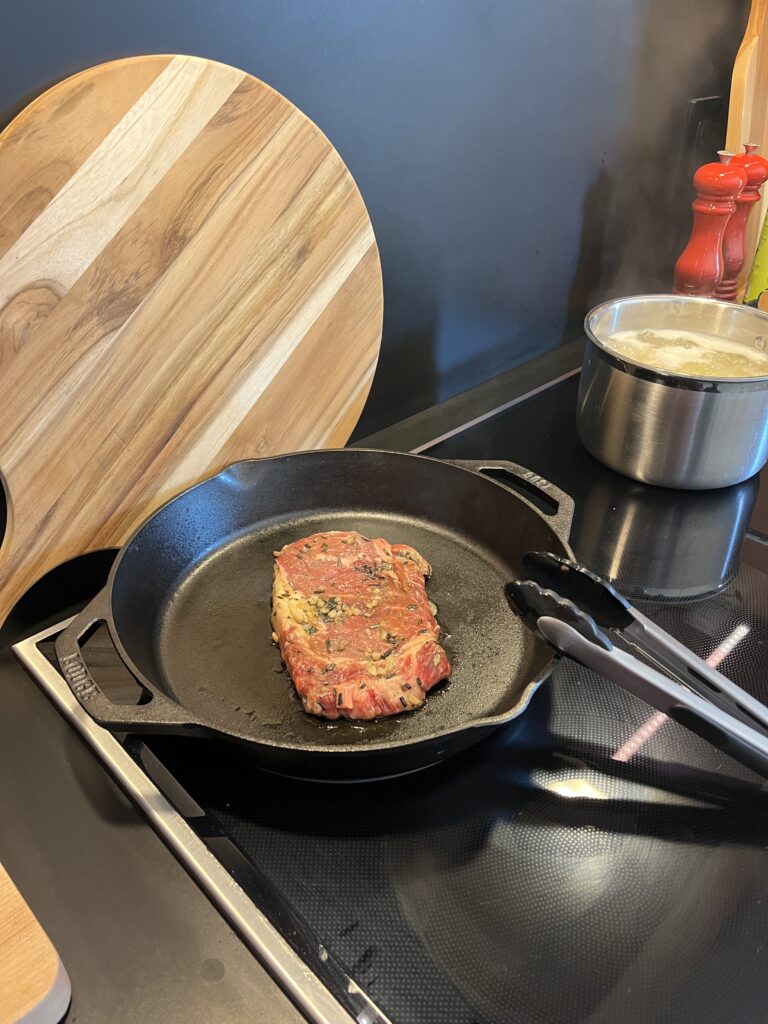
Most people already own induction-compatible cookware without realizing it. Stainless steel performs beautifully, and cast iron is actually one of my favorites on induction.
Cast iron heats evenly, holds temperature well, and gives a great seared or grilled flavor—especially for vegetables, proteins, or anything you want a little crisp on. It feels solid and familiar, not precious or fussy, and it works exceptionally well on an induction cooktop.
And if you are buying new cookware, many brands now clearly label their pans as “induction ready” or “induction compatible.” It’s no longer a guessing game. The market has caught up, and finding cookware that works is easy and widely accessible.
I didn’t have to replace my kitchen tools or relearn how to cook—and that made the transition feel effortless.
A Safer, Calmer Kitchen
Another benefit I’ve come to appreciate is how the kitchen feels when I’m cooking.
There’s no open flame, no gas smell, and the surface cools quickly once a pan is removed. The space feels calmer and more controlled, especially when multiple people are moving through the kitchen.
That sense of ease is something I didn’t fully value until I experienced it day after day.
Clean Energy Wasn’t the Only Goal—But It Became a Win
We didn’t choose induction because of a checklist. It was simply part of an all-electric home designed around efficiency, sustainability, and indoor air quality.
Living with it has made me appreciate the bigger picture:
- No combustion byproducts released into the kitchen
- Better indoor air quality while cooking
- A home that works naturally with renewable energy
None of this feels like a sacrifice. It just feels thoughtful and forward-looking.
Homeowner First, Designer Second
As a designer, I understand why some people hesitate around induction. As a homeowner, I can say that it has made cooking easier, cleaner, and more enjoyable.
If I were designing another home—or even just another kitchen—induction wouldn’t feel like a bold choice. It would feel like the obvious one.
Sometimes the best design decisions are the ones you grow into. This was one of them.